
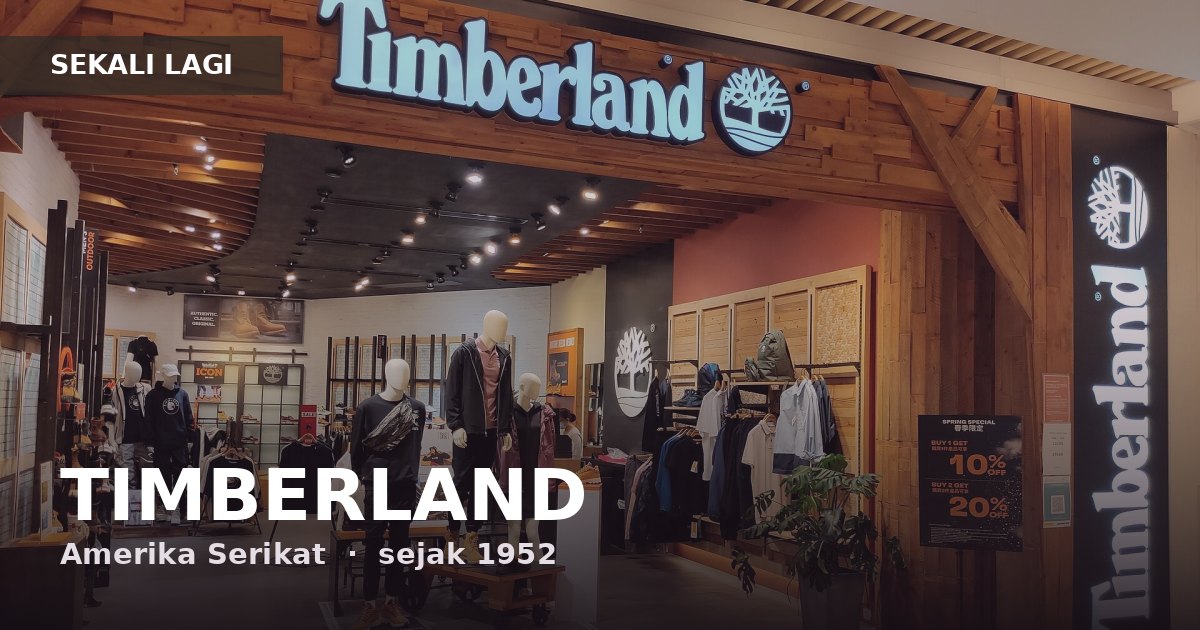
Timberland is an outdoor footwear brand from the United States. Its roots are in the Abington Shoe Company in Boston, half of which was bought by shoemaker Nathan Swartz in 1952. At first the company made shoes and boots for other brands. In 1973 they launched their own Timberland boot, and since 1978 that name has been used as the company name. The best-known model is the Yellow Boot. Their waterproof boot was designed for New England winters, but in the 1980s and 1990s it was also widely worn by hip hop figures in New York. For secondhand buyers, Timberland is interesting because its history of use is long, from work boots to streetwear.
Read more
Nathan Swartz began his career as a shoemaker in 1918. He came from Odesa, Ukraine, and his family moved to Boston before World War I. The Abington Shoe Company itself was founded in 1933 in South Boston. In 1952 Swartz bought half of its ownership, then together with his sons took over the remaining shares. Throughout the 1960s, the company made shoes and boots under other brands' labels.
In 1969 Abington moved to Newmarket, New Hampshire. Its focus shifted to waterproof boots made with injection molding, so they could withstand the winters in that region. The Timberland boot was introduced in 1973. Demand grew until the Swartz family stopped producing for other companies and concentrated on their own brand. In 1978 the company name was changed to The Timberland Company. Jeffrey Swartz, the founder's grandson, joined in 1986 and became CEO after Sidney Swartz retired in 1998. Timberland is now owned by VF Corporation.
Beyond its image as a New England worker's boot, the boot was adopted by hip hop figures in New York in the 1980s and 1990s. Fans call it "Timbs" or "Butters", and it has been nicknamed "the Air Jordans of boots". Timberland has also collaborated with Supreme, Tommy Hilfiger, Jimmy Choo, Off-White, and Louis Vuitton in 2024. Collaboration editions like these deserve a closer check on the secondhand market.
- Yellow Boot: the best-known Timberland model, now considered iconic.
- Timberland PRO: the line of industrial boots for work needs.
- Timberloop Trekker: a boot launched on Earth Day 2022 and designed so it can be fully taken apart and then recycled.
- Collaboration editions: joint releases with brands such as Supreme, Off-White, and Louis Vuitton, made in limited numbers.
What we check before listing
The first thing we look at is the sole: tread depth, a slanted heel, and the join between the sole and the upper. We check the upper for cracks, deep scuffs, or water stains, especially in the creases near the toe. The stitching, eyelets, and laces should be neat and not loose. We compare the logo and the prints on the insole, tongue, and size label with the production habits we know, then smell the inside to make sure it is not damp or musty. For collaboration editions, we look for completeness such as the box and details specific to the release. These are our observations, not a guarantee of authenticity.
Caring for it
Brush off dust and mud with a soft brush and a damp cloth, then air them out in a shaded place. Do not dry them in direct sun or near a heater, because the upper material can harden and the sole can come loose. If the upper is leather, occasionally apply a treatment suited to that type of leather. Stuff the inside with paper when storing them so the shape is kept.
FAQ
What do "Timbs" and "Butters" mean?
Both are fan nicknames for Timberland boots. The names became popular after the boots were widely worn in New York hip hop culture in the 1980s and 1990s.
Are all Timberland shoes waterproof?
Not necessarily. Since the late 1960s the company has focused on waterproof boots, but each model is different. For secondhand items, water resistance also depends on the condition of the material and the sole join, so do not assume it.
What is the difference between the Yellow Boot and Timberland PRO?
The Yellow Boot is the best-known Timberland model. Timberland PRO is the line of industrial work boots. The two are meant for different uses.
How do I judge the authenticity of secondhand Timberland?
Check the logo, the prints on the insole and tongue, the neatness of the stitching, and the quality of the sole. Compare with the official product photos on timberland.com. No single sign guarantees anything, so look at everything together.
References
Facts summarised and rewritten from the sources above (CC BY-SA licence).